”Success carries responsibility“
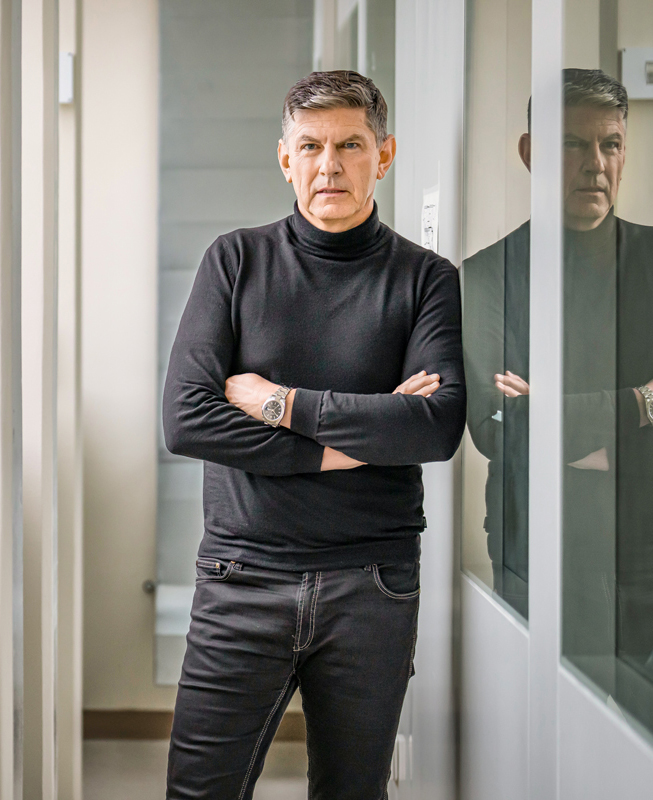
© Paul Scherrer Institut PSI / Markus Fischer
As a professor at ETH Zurich and laboratory head at the Paul Scherrer Institute (PSI), Roger Schibli shapes radiopharmacy. In this conversation, he explains why he believes philanthropy is an expression of academic responsibility.
Radiopharmacy is a term rarely heard in everyday life. What defines this discipline, and what excites you about it?
ROGER SCHIBLI – In radiopharmacy, we couple targeting molecules with minute amounts of radioactivity. This creates radiopharmaceuticals that can either detect diseases within the body or treat them with precision. What’s remarkable is that the molecule itself often remains the same; only the type of radioactivity determines whether it serves a diagnostic or therapeutic purpose. We call this interplay “theragnostics”. It’s a unique medical concept that continues to fascinate me.
Drug development is associated more with the pharmaceutical industry than universities. Why is radiopharmacy an exception?
Radiopharmaceutical agents pose major logistical challenges. Radioactive isotopes are short-lived, so drugs can’t be massproduced or stored. Instead, they must be manufactured fresh every day, often right in the hospital. These special demands have long made the field too complex and economically unattractive for industry. As a result, research and application remained largely academic – at least until recently.
What has changed?
Large clinical trials now show that radiopharmaceutical therapies are highly effective in treating advanced cancers and generally cause fewer side effects than conventional chemotherapy. Until now, they’ve mainly been used for patients who have exhausted all other treatment options. Increasingly, however, interest is turning to applying the therapies at an earlier stage and combining them with established cancer treatments. This raises promising options for patients as well as new research questions on topics like long-term side effects, optimised molecules and novel isotopes.
How do you experience the collaboration between ETH Zurich and PSI?
As a true win-win. PSI benefits from ETH’s broad academic environment, and from access to talented students and international networks. ETH benefits from PSI’s unique infrastructure and expertise. It’s important to me to link both institutions in my research and teaching. My doctoral researchers and senior scientists, for example, work alternately at ETH and PSI.

© Paul Scherrer Institut PSI / Markus Fischer
“In my eyes, ETH and the ETH Foundation are institutions of trust. You can be sure where the money goes: into research, students and the future of the university.”
As a professor, you also train the next generation of scientists. How do you think the education system has changed in recent years?
It’s become more demanding – for students and teachers alike. Information overload is vast; with AI it’s exploding. It’s now more important than ever that students must learn to think critically: to formulate problems, develop hypotheses and interpret results. That’s why I still conduct oral exams. Those who’ve truly understood the connections can discuss, argue and make well-founded decisions – on the spot.
If you had to describe ETH in a word from radiopharmacy, what would it be?
I’d compare it to a generator. In radiopharmacy, this is a device that continuously produces daughter nuclides from a “mothernuclide” – which can then be used for diagnostics or therapy. ETH is like that for me: it trains and constantly unleashes new potential – knowledge, talent and ideas radiating far beyond the campus.
You also support ETH philanthropically. Why?
Because I believe that success carries responsibility. My research success owes much to ETH and PSI. So I want to give something back. In my eyes, ETH and the ETH Foundation are also institutions of trust. You can be sure where the money goes: into research, students and the future of the university.
Can you give an example?
Yes. The MedLab Fellowship, for instance: a research-oriented training programme at ETH for young medical doctors. Exchange between medicine and research is key to solving problems arising from clinical practice. Programmes like MedLab build that bridge, and we need more of them.
What do you wish for the future of ETH?
More people who choose to support basic research through philanthropy. Private donations can provide support swiftly and unbureaucratically, enabling bold visions to take shape. Often, it’s seemingly frivolous intellectual pursuits that later lead to genuine scientific breakthroughs – as in my own case, ultimately leading to the creation of Araris Biotech.
About
Roger Schibli studied chemistry at the University of Basel, where he also completed his doctorate. After a number of research assignments, ETH Zurich appointed him Assistant Professor in 2004, followed by Associate Professor in 2010 and Head of the Center for Radiopharmaceutical Sciences. Since 2019, he has served as Full Professor at ETH Zurich, developing radiolabelled compounds for targeted tumour diagnosis and therapy. He is also a co-founder of Araris Biotech, an ETH and PSI spin-off acquired by a Japanese pharmaceutical company in 2025.