Feeding the next generation
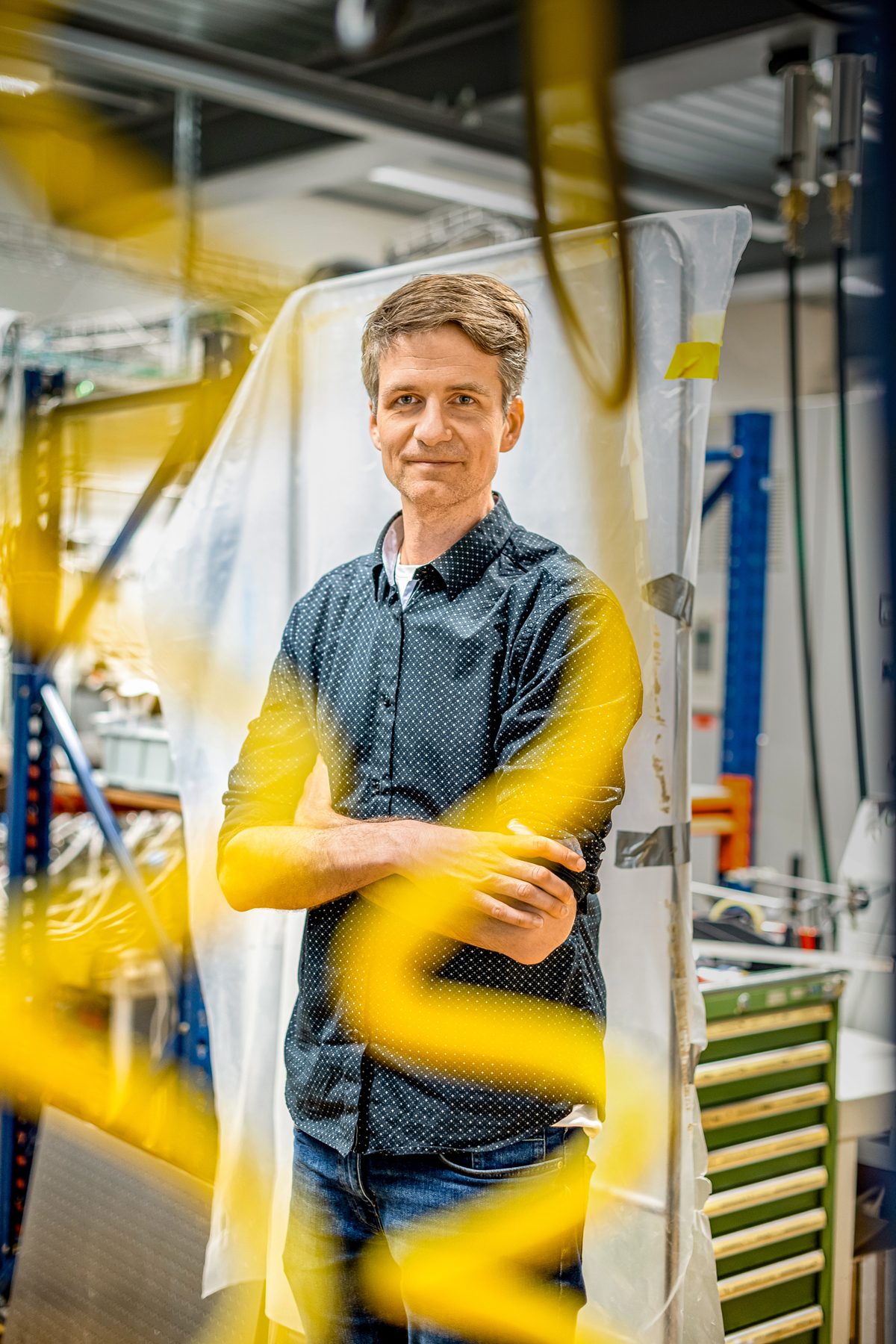
By developing processes that transform foods, ETH assistant professor Patrick Rühs finds edible solutions for changing needs.
Your research field is food structure engineering – what does that involve?
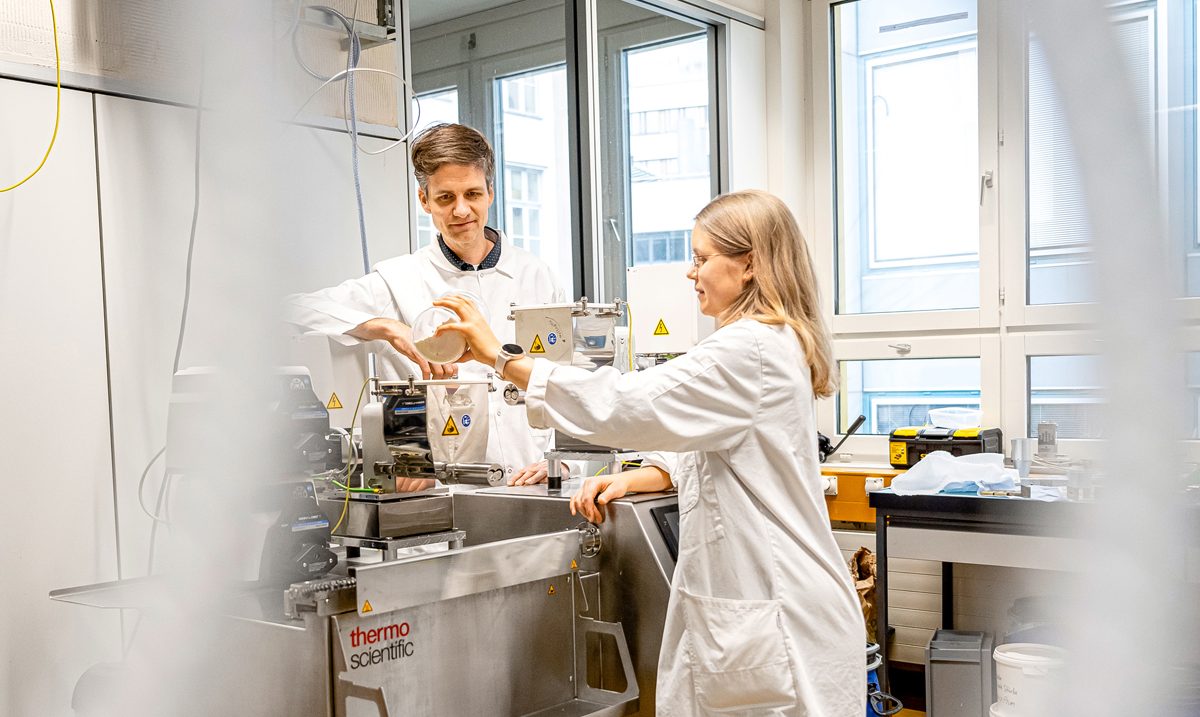
PATRICK RÜHS – The aim of my research is to develop new processes that allow foods to be produced with improved nutritional profiles. In essence, many of the steps are similar to those in a home kitchen – just on a larger scale. We use techniques such as extrusion, where a dough-like mixture – not unlike pasta-making – is forced under pressure through a nozzle, or freeze structuring, which can create entirely new textures in food simply by freezing and thawing. We also apply traditional methods to new raw materials: for example fungal fermentation, familiar from Brie cheese or Indonesian tempeh.
Don’t we already have enough wonderful foods?
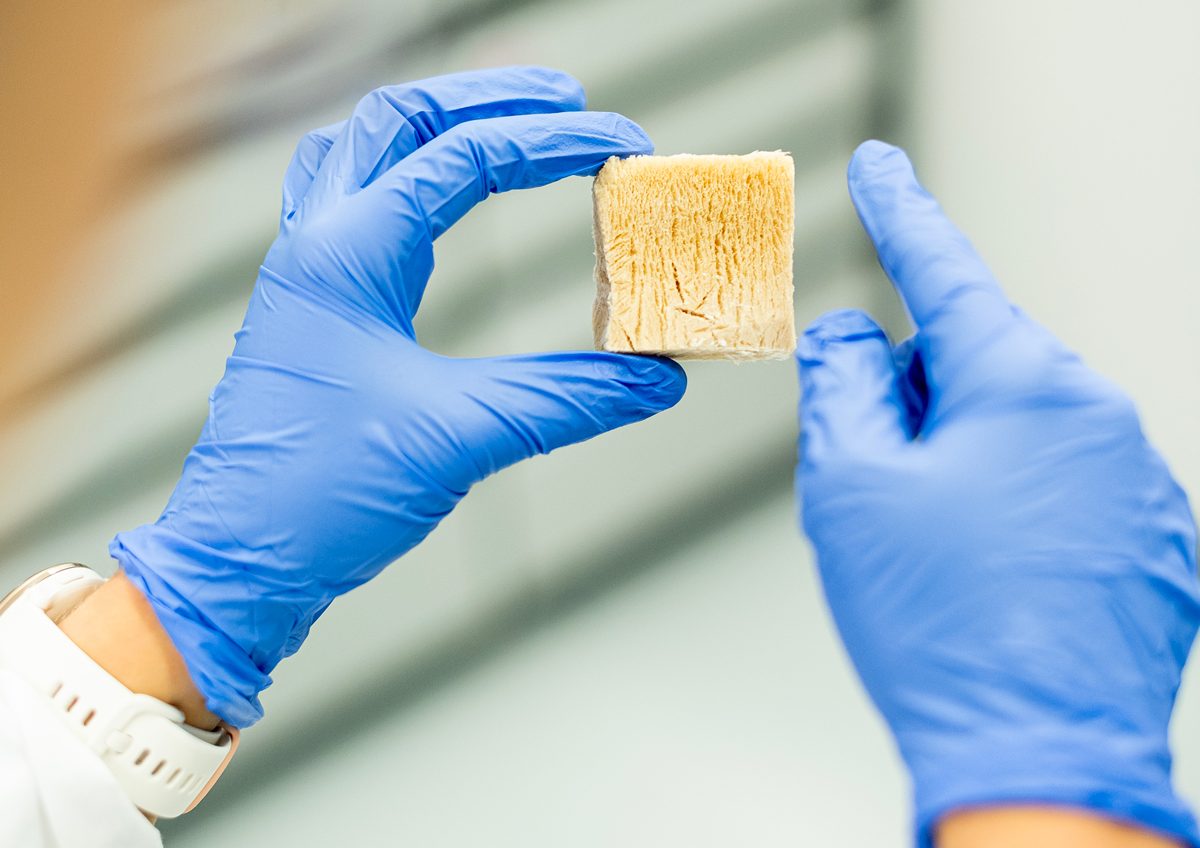
People’s needs are changing. There’s currently a growing desire for more plant-based diets, or for foods that are particularly high in fibre or protein. Global warming is also altering growing seasons – and therefore the availability of raw materials – which is why alternatives to products such as chocolate and coffee are gaining importance. Sometimes, it’s also about offering already excellent foods in a new, more appealing form. There are strong arguments, for example, for promoting the consumption of legumes, i.e. lentils, peas and beans. They’re rich in fibre and protein and including them more in our diets would benefit the environment too. Yet many people dislike lentils; if a process existed that altered their texture and flavour to make them more attractive to lentil-haters, that would be a clear win. Other goals include finding processes that use less energy or can be made more widely accessible. Freeze structuring, for example, could be one such democratisable technique: with this method, lentils – or a lentil-based protein dispersion – can beturned into a meat alternative using nothing more than a freezer.
© ETH Foundation / Daniel Winkler
“We’re researching processes that require less pre-processing of raw materials. A soya bean should be processed as a whole.”
There’s a widespread belief that the less processed a food is, the better.
This view is too simplistic. Food processing is hugely important today: it not only makes food safe and nutritious, but also available and affordable. Not everyone has their own garden, and food needs to be preserved and distributed. Nor would anyone recommend eating raw chicken or raw green beans. The belligerent term “ultra-processed food” (UPF) makes no scientific sense. It often seems to be targeted at industrial production in particular. Yet a cake isn’t automatically healthier just because you bake it yourself. Of course, processes should become smarter: just as we’ve come to recognise that whole wheat bread is preferable to white bread – because beneficial micronutrients are not removed from the flour – we’re researching processes that require less pre-processing of raw materials. A soya bean should be processed as a whole, with all its components intact. This would improve nutritional quality and could also help defuse the often misleading debate around UPFs. Processing can make a difference – and that difference can be positive, as in fermentation, which improves nutrient availability.
How has the industry experience you gained at the ETH spin-off Planted benefitted your group?
At Planted, I spent four years working on a plant-based steak. I was able to follow the entire innovation cycle and learn how I, as a researcher, can help companies create better food. These years in the industry also gave me a clearer sense of the key challenges companies face and what they expect from future graduates.
Your research group shares lab space with Alexander Mathys’ group. Do you collaborate?
We complement each other very well: we focus on fungi, they on algae. From a nutritional standpoint, fungi and algae could make a fascinating combination. We don’t operate in silos – we’re happy when we find it’s better to cover strategic areas together. Take extrusion, for example. Although the process has been around for 50 years, we still don’t understand it in depth. With greater insight, the extrusion process could be adapted to the raw material, rather than the other way round, potentially eliminating certain processing steps altogether. Alongside Alexander Mathys’ lab, the ETH World Food System Center is also of great importance to us. It enables broader connections with the various disciplines, as well as with academic partners and industry.
From the lab back to the dining table: what do you like doing best in the kitchen?
My hobby is baking sourdough bread, so our family of four usually eats bread I’ve baked myself.
Patrick Rühs’ professorship was made possible by donations from Givaudan, Bühler and Nestlé.
© ETH Foundation / Daniel Winkler