Food for thought

In agriculture and food, too, sharp minds who have studied and conducted research at ETH Zurich are questioning the status quo. Some take the leap into entrepreneurship, either independently or supported by donors. A selection:
Catchfree: seafood made from plants
Fish and seafood without overfishing, bycatch or microplastics: Catchfree structures rice, mushrooms and soya into seafood, with a short ingredient list but rich in protein and omega-3. Available in selected restaurants.
- Funded by a Pioneer Fellowship
- Website
Caterra: high-tech weeding robot
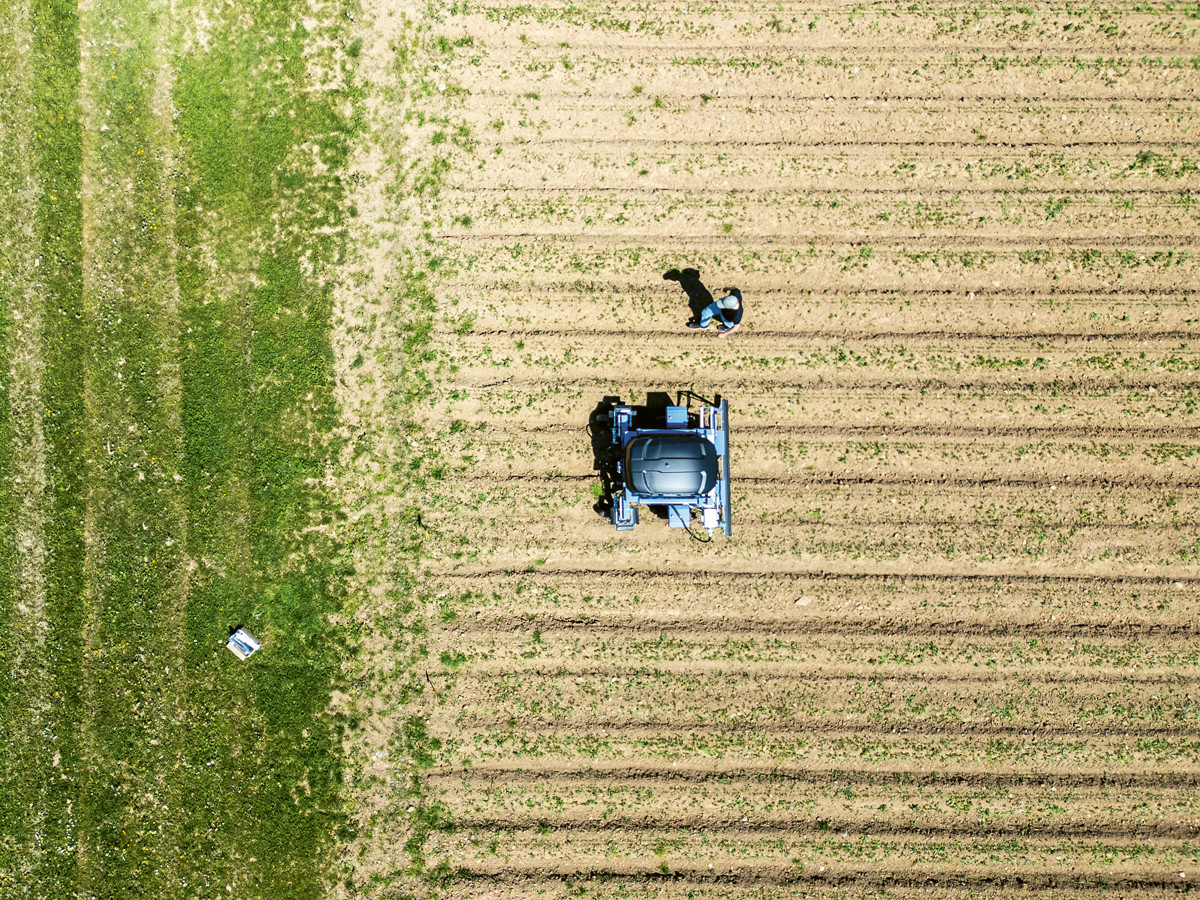
An autonomous robot removes weeds from crops using lasers – enabling scalable ecological farming. Operating day and night, and in all weathers, it offers a solution for the many farms struggling to find enough labour for weeding. Learn more
- Originating in the Student Project House and funded by a Pioneer Fellowship
- Website
Digit Soil: for optimal fertilisation
This start-up enables farmers to accurately measure nitrogen release in their soils. Using biochemical measurements and weather data as a sound basis for decisionmaking, the result is a higher yield quality, reduced nitrate leaching and lower greenhouse gas emissions.
- Originating in the Student Project House and funded by a Pioneer Fellowship
- Website
Tastelab: culinary delights driven by science
Dedicated to the future of food, this creative studio founded by astrophysicist Sue Tobler and computer scientist Remo Gisi may well be one of ETH’s most unusual spin-offs. It offers a range of innovative gastronomy projects, catering and events at the intersection of science and culinary art.
Olexir: healthier fats from plants
Solid fats in foods and cosmetics contain high levels of saturated or trans fatty acids, which can pose health concerns. Olexir’s technology uses plant proteins to transform liquid oils into solid structures.
- Funded by a Pioneer Fellowship
- Website
Planted: meat alternatives
This ETH spin-off delivers sustainable plant-based proteins. Raw materials – such as peas, sunflower or soya – are grown by European farmers and processed into flour. Extrusion and fermentation create fibrous, juicy plant-based meat.
- Funded by a Pioneer Fellowship
- Website
Terensis: harvest forecasts from space
This ETH spin-off uses satellite and weather data to predict crop yields and climate risks such as drought and frost – globally and around the clock. This helps producers and buyers in the food industry respond more quickly to price shocks.
- Funded by a Pioneer Fellowship
- Website
For even more trailblazing start-ups
The Pioneer Fellowship programme funds outstanding researchers with entrepreneurial ambitions along the road to a market-ready product. Selected by a panel of experts, ten to fifteen Pioneer Fellowships are awarded every year from funding donated by foundations, companies and over 200 private individuals.
ETH Zurich is looking to expand the programme so that even more young researchers can receive up to CHF 180 000, coaching opportunities and the chance to develop their research findings through to commercial application.
© ETH Foundation / Valeriano Di Domenico