Bridging biology, data and society
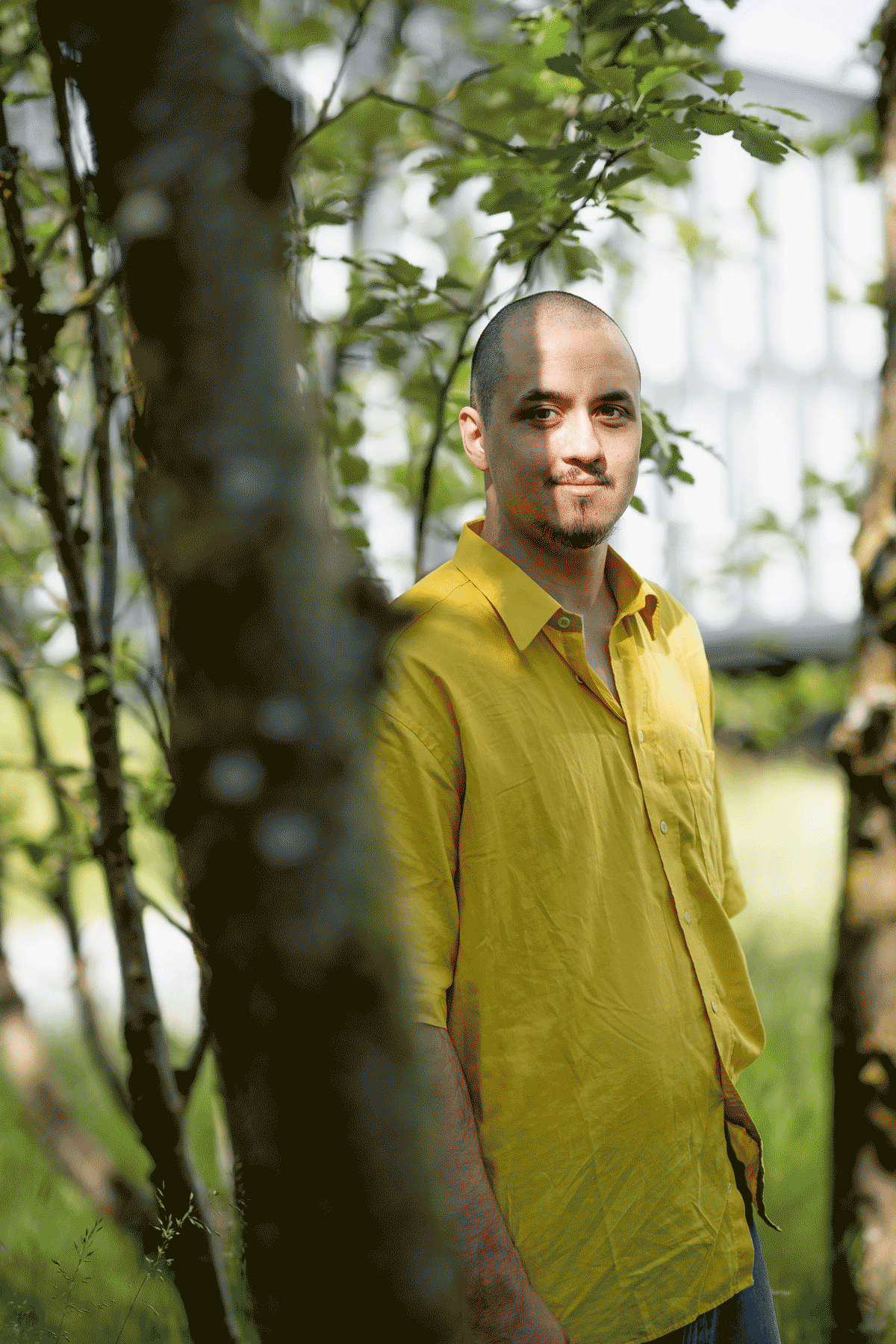
From rural Brazil to ETH Zurich: supported by a need-based Scholarship, Gianluca Ikeda Ferretti is conducting research on how evolution and genes shape our health. His aim is to build bridges between science and society.
“I spent my childhood in a rural area near São Paulo, surrounded by toucans and monkeys. When I was ten, I moved with my parents and three siblings to Ticino, my father’s home region. After my Matura in Lugano and civilian service at Agroscope, I enrolled in the Biology Bachelor’s programme at ETH Zurich, as I’d always been drawn to the natural sciences.
Understanding connections
I’m particularly interested in developmental biology and the question of how evolution influences development and health. For my Master’s thesis in ETH’s Molecular Mechanisms of Disease programme, I’m researching in the field of evolutionary medicine. At the heart of my work is the protein Piezo1, whichplays an important role in red blood cells. I’m investigating how different genetic variants of this protein relate to traits such as body weight in mammals, and what role they’ve played in evolution. In the long term, this research will help us to better understand the links between genetic variation, disease and evolutionary adaptation – and to develop personalised therapies, for example for hereditary blood disorders.
Freedom through funding
My parents work in the arts, so it was clear they’d only be able to provide limited financial support for my studies. I funded my Bachelor’s degree through cantonal scholarships, savings and part-time jobs as a teaching assistant and food-delivery driver. Receiving an ETH need-based Scholarship from Fondazione PKB for my Master’s was a huge relief. The scholarship gives me financial security, so I can focus entirely on my thesis.
Looking ahead, I’d like to pursue a doctorate. Besides evolutionary developmental biology, I’m also interested in how science and politics interact. The Covid-19 pandemic showed just how important – and challenging – it is to communicate scientific findings in a way that’s clear and nuanced. I find it alarming how doubt is sometimes deliberately cast on scientific evidence, such as on climate change or health topics. Misinformation can spread even faster on social media, making it all the more important to provide clear context. While working on my Master’s thesis, I often notice how demanding it can be to fully understand scientific publications. That’s why I’m keen to help make research more accessible to society – whether through my own scientific work or by engaging directly with the public.”
In the academic year 2025/26, around 130 young people were supported by a scholarship.
With amounts from CHF 600 to CHF 20’000 a year.