Andrea Bach on curiosity, ice crystals and plant-based foods
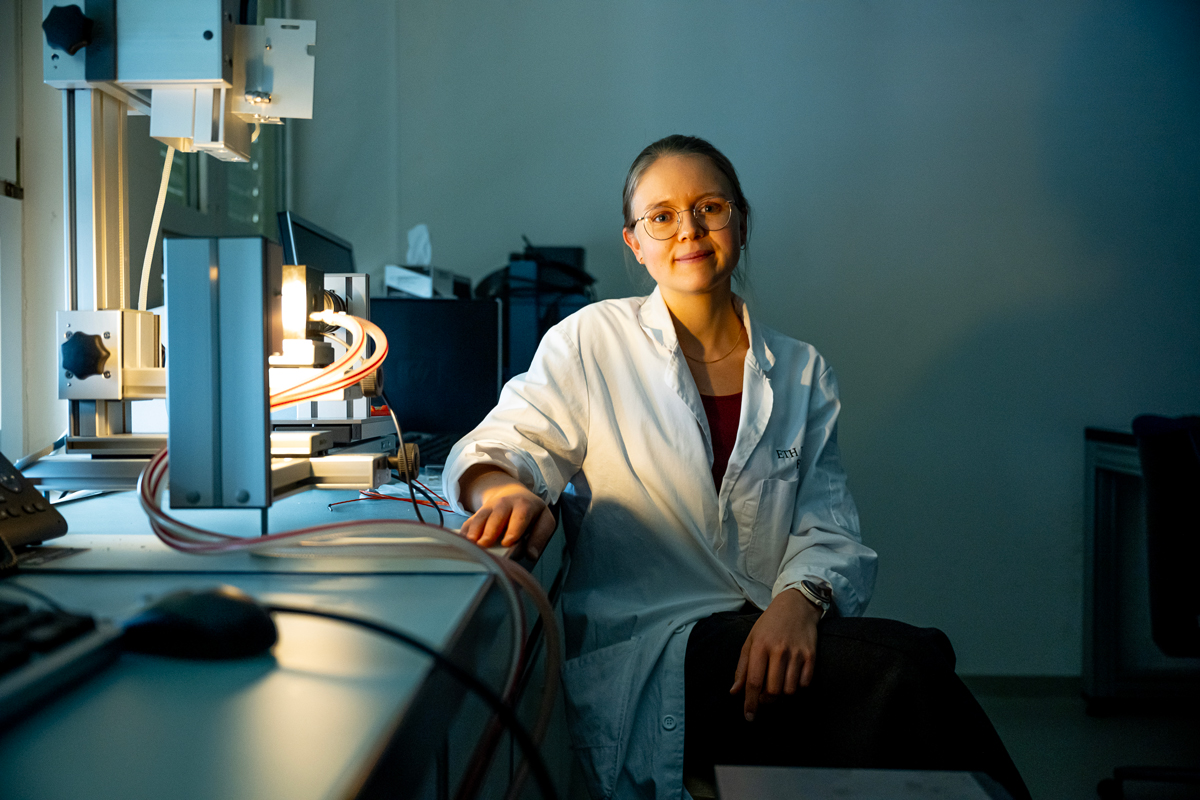
She studied Food Science at ETH Zurich, supported by an Excellence Scholarship. After gaining experience in industry, Andrea Bach has now returned to ETH, where she is pursuing a doctorate in Patrick Rühs’s group and exploring new approaches to food processing.
After several years at Planted and a stint at Nestlé, why did you decide to return to ETH as a doctoral student?
ANDREA BACH – At Planted, I had the opportunity to gain highly formative start-up experience in a variety of roles: first as a production employee and during assignments in the food truck, then through my Bachelor’s and Master’s theses, and finally in prototype development as part of the science team. After that, I was curious to experience the working environment of a larger company, which I also found very interesting during my time at Nestlé. When I heard about the doctoral position with Patrick Rühs, I was immediately excited. It was not only the topic that appealed to me, but also the prospect of building on the productive collaboration I had previously had with him at Planted.
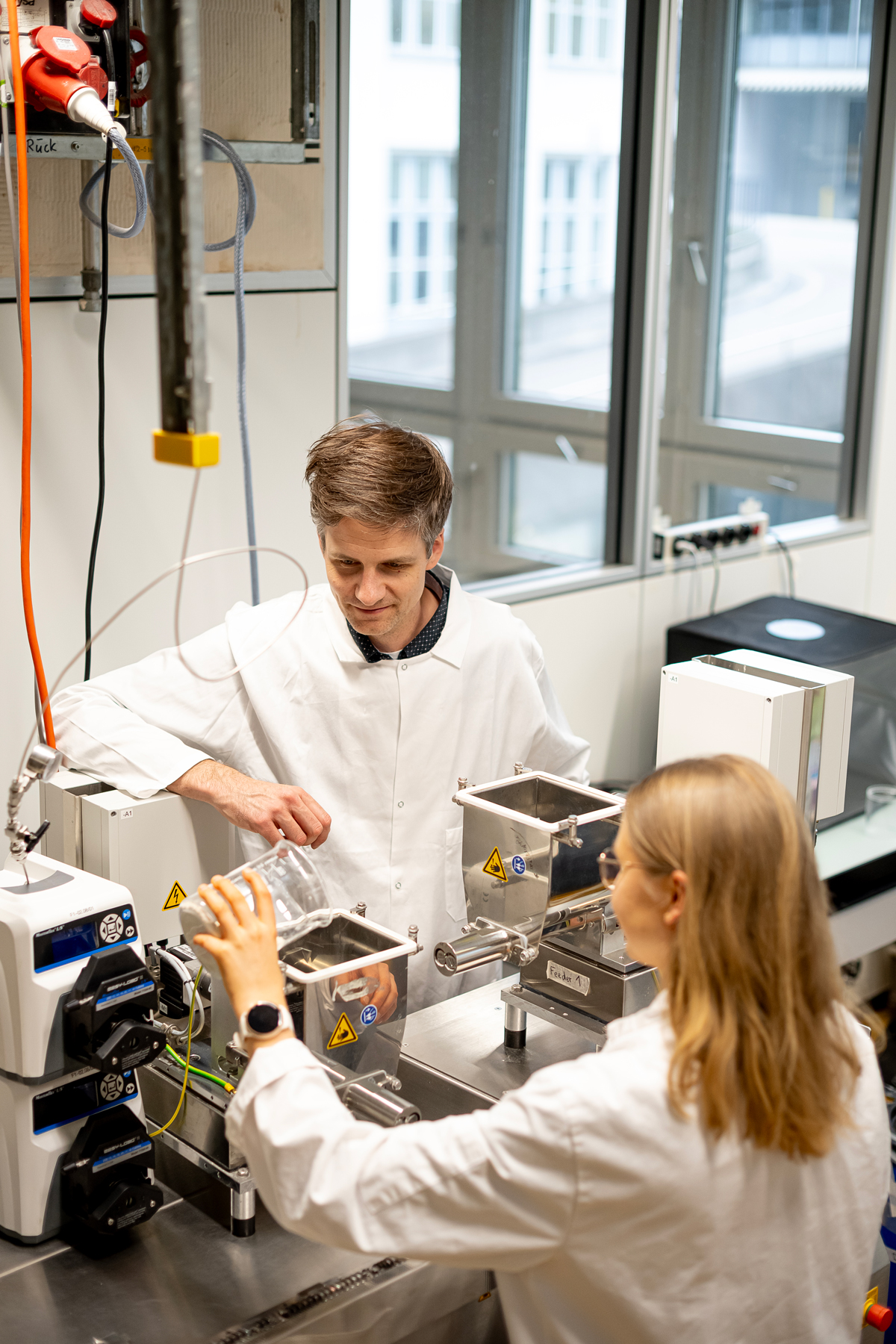
© ETH Foundation / Daniel Winkler
What is your group researching – and what is your own focus?
Our group investigates new approaches to food processing, including for plant-based raw materials. One central idea is to avoid first breaking raw materials down into their individual components – for example, separating soybeans into oil, protein fractions, as well as fibre and carbohydrate components – only to later reassemble them into a product. One focus of my research is ice crystals. In food, they are usually seen as a problem, for instance when a cucumber or another water-rich vegetable loses its crisp texture after thawing. We, however, are trying to use ice crystals deliberately and guide their growth in a specific direction during freezing by cooling the food in a controlled way, rather than evenly throughout. This allows new structures, and therefore textures, to emerge. The process is called freeze structuring and is currently attracting increasing attention because it is comparatively simple and holds great potential for new plant-based foods.
Looking back: What did the Excellence Scholarship, which enabled you to complete your Master’s degree at ETH, mean to you?
A great deal. For me, the scholarship was a significant recognition and, at the same time, an important encouragement. It showed me that my work was being noticed, and that gave me a lot of confidence. The exchange with the other scholarship recipients was particularly valuable to me. It was very inspiring to meet people from a wide range of disciplines who are following their own paths with so much knowledge, curiosity, and dedication. I still benefit today from the experiences I had through the Excellence Scholarship – and I hope that one day I will be able to pass some of that on.
About “3 questions for …”
In this series, we hear from people across the ETH community: researchers, young entrepreneurs, supported talents, alumni and partners. The focus is on personal journeys, current projects, and how funding and engagement create impact for society.