Smarter learning with AI
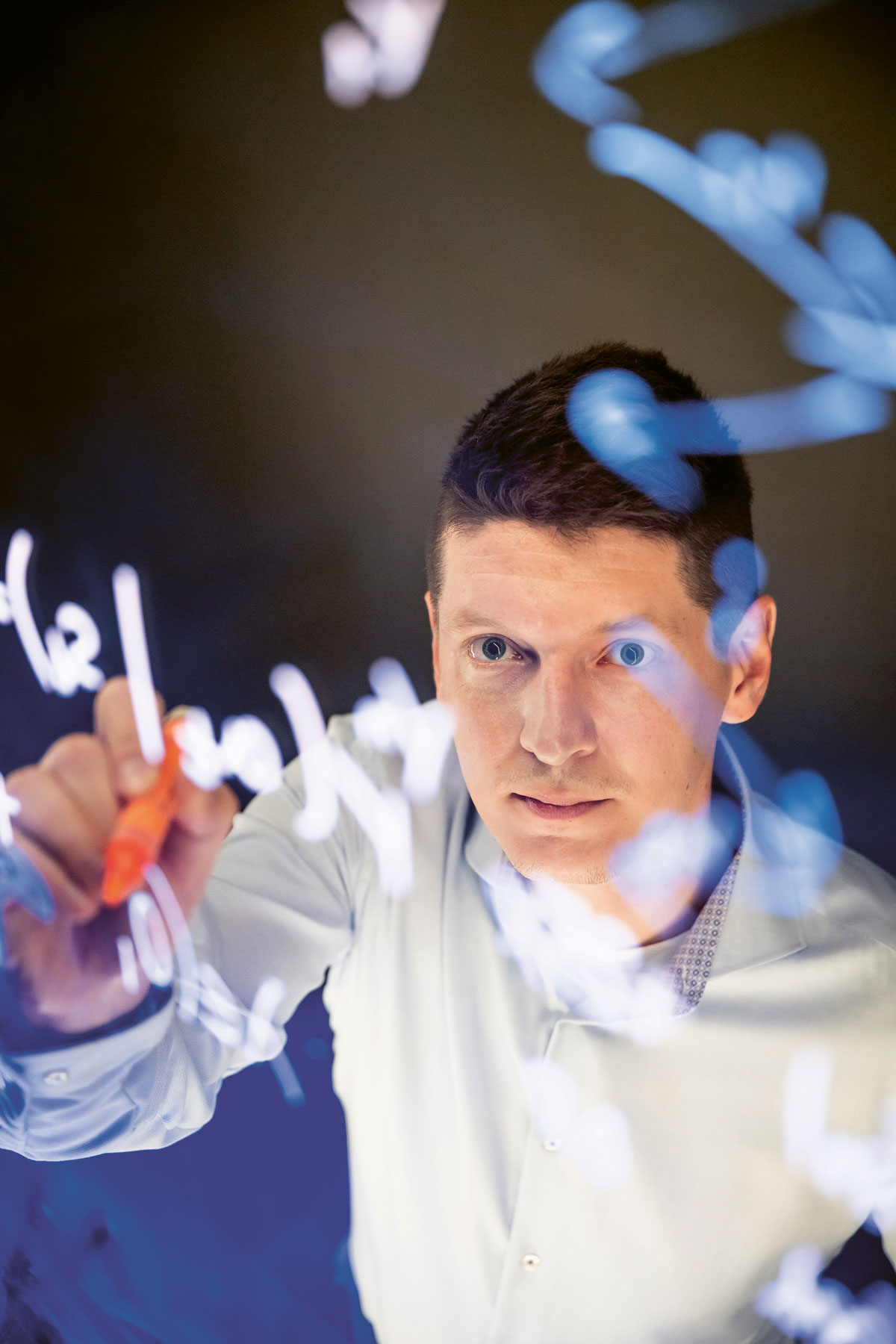
How can large language models become tutors with real pedagogical value? This is the question doctoral student Jakub Mačina is exploring at the intersection of natural language processing and learning sciences.
Type a question into ChatGPT, Gemini or Claude – and within seconds the answer pops up on the screen. Efficient, yes, but not necessarily conducive to lasting learning. Jakub Mačina, fellow at the ETH AI Center, is tackling the challenge of how large language models (LLMs) need to be programmed so they can genuinely support students in their individual learning journeys.
Step by step to real learning
“LLMs are good at solving problems and delivering answers. But in an educational setting, it’s the student who needs to do the thinking and actively engage with the material,” Jakub Mačina says. At the ETH AI Center, he is developing models that act as collaborative partners to students. Rather than giving away the solution, the models provide prompts and guidance that help learners build understanding step by step.
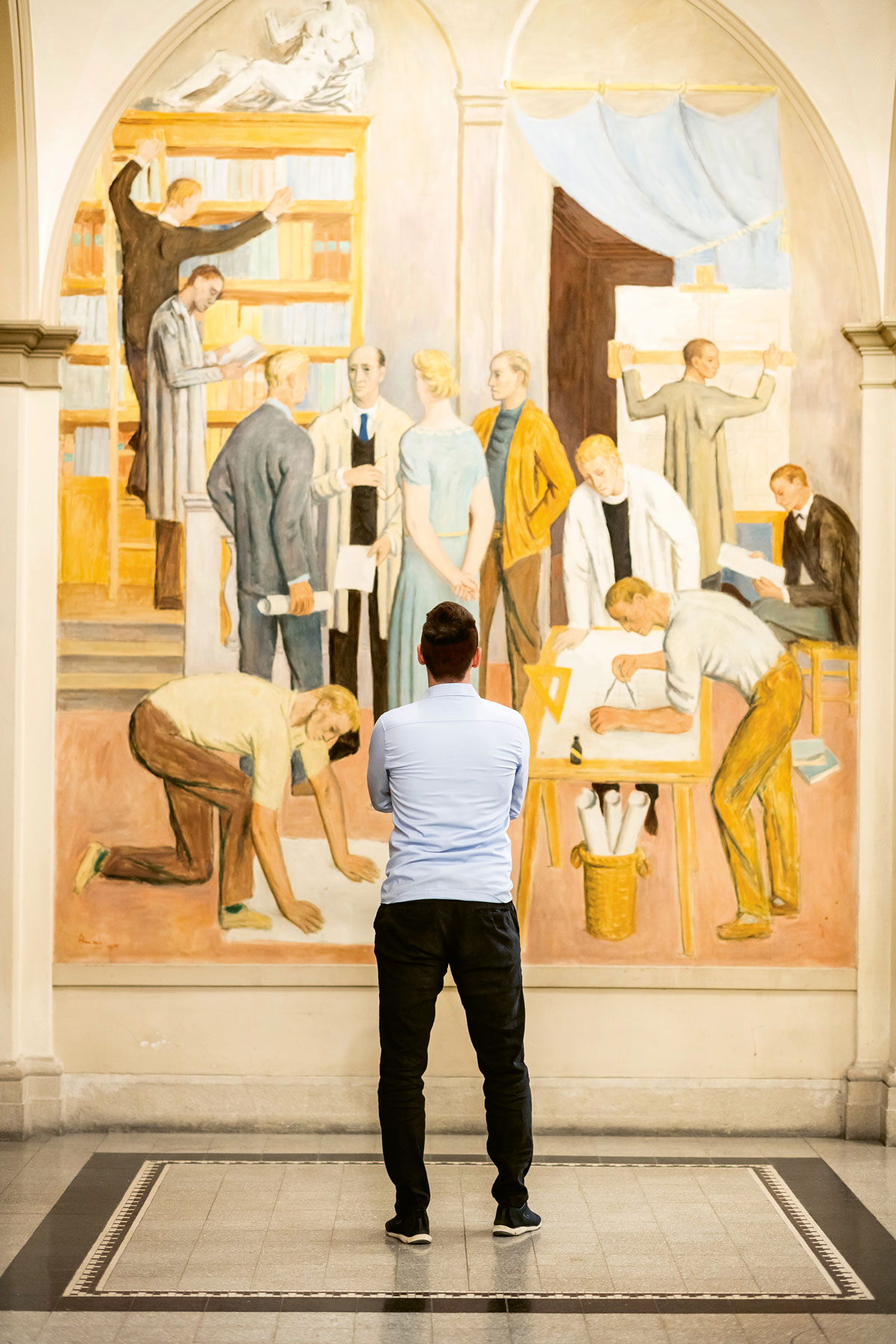
© ETH Foundation / Daniel Winkler
For his work, Jakub Mačina draws on proven pedagogical concepts from learning sciences, such as Socratic questioning – targeted follow-up questions that stimulate independent thinking – and productive failure. This approach, developed by ETH Professor Manu Kapur, presents learners with problems that are still beyond their ability to solve. The trial-and-error method activates prior knowledge and heightens the “aha” effect when the explanation is given.
To achieve this, Jakub Mačina works with open-source models, such as Apertus from the Swiss AI Initiative, and develops his own open-source models like TutorRL, which supports students in solving maths problems. For now, his focus is on secondary and high school levels, but eventually the models will also be able to assist with university-level STEM questions. He has also created MathTutorBench, a benchmarking tool that not only assesses whether a tutoring model provides the right answer but, more importantly, how it teaches.
Humans and AI in collaboration
“LLMs for tutoring are becoming increasingly popular,” Jakub Mačina observes. Major players now offer tailored models, such as Gemini’s LearnLM or OpenAI’s Study mode. In Switzerland too, there are various providers, including the AI app Tutor.new, developed by two ETH students. While he sees these as exciting applications, he notes that currently they tend to be more suited to a private tutoring setting – and not for use in the classroom.
His research aims to fill this gap. So does this mean the classroom of tomorrow will take place at home with an AI tutor? Jakub Mačina shakes his head. “It’s not about replacing teachers, but about making their work more efficient.” He sees AI models as complementary: students can learn at their own level while teachers gain more time for individual support. On top of that, insights from the models can help optimise teaching by showing at which stage of problem-solving students run into difficulties.
Making education more accessible
According to Jakub Mačina, the human element could become even more important in the future. LLMs are changing how a learner’s knowledge can be tested and monitored. He envisions a shift back to in-person written and oral exams, where students must critically reflect on machine-generated answers and demonstrate understanding of the processes involved. “Like back in the day, when you had to solve programming problems on paper,” he laughs, remembering his computer science studies at the Faculty of Informatics and Information Technologies STU in Bratislava.
Before joining the ETH AI Center, Jakub Mačina worked for four years as a developer at Exponea, a tech start-up specialising in customer data analytics and marketing automation, which was acquired by US provider Bloomreach in 2021. His return to research was motivated by a desire to apply his expertise in personalisation to the education sector. “I want to help ensure that high-quality, individualised education does not remain the privilege of a few,” says the doctoral student, who got his first taste of ETH as an intern at the Paul Scherrer Institute back in 2016.
Thanks to his fellowship funded by the Asuera Stiftung, he is now able to pursue this goal at the ETH AI Center, developing new interdisciplinary tools and solutions that hopefully find their way into the educational landscape. With his entrepreneurial background, Jakub Mačina certainly has the experience to make it happen.
AI Fellowship programme
Research fellowships for outstanding international doctoral and postdoctoral students form one of the main pillars of the ETH AI Center. The fellows’ work spans everything from basic research to practical applications in areas such as robotics, digital health, learning sciences and language processing. The fellowships are largely made possible by donations.