Lea Beusch on extreme weather, excellence and success
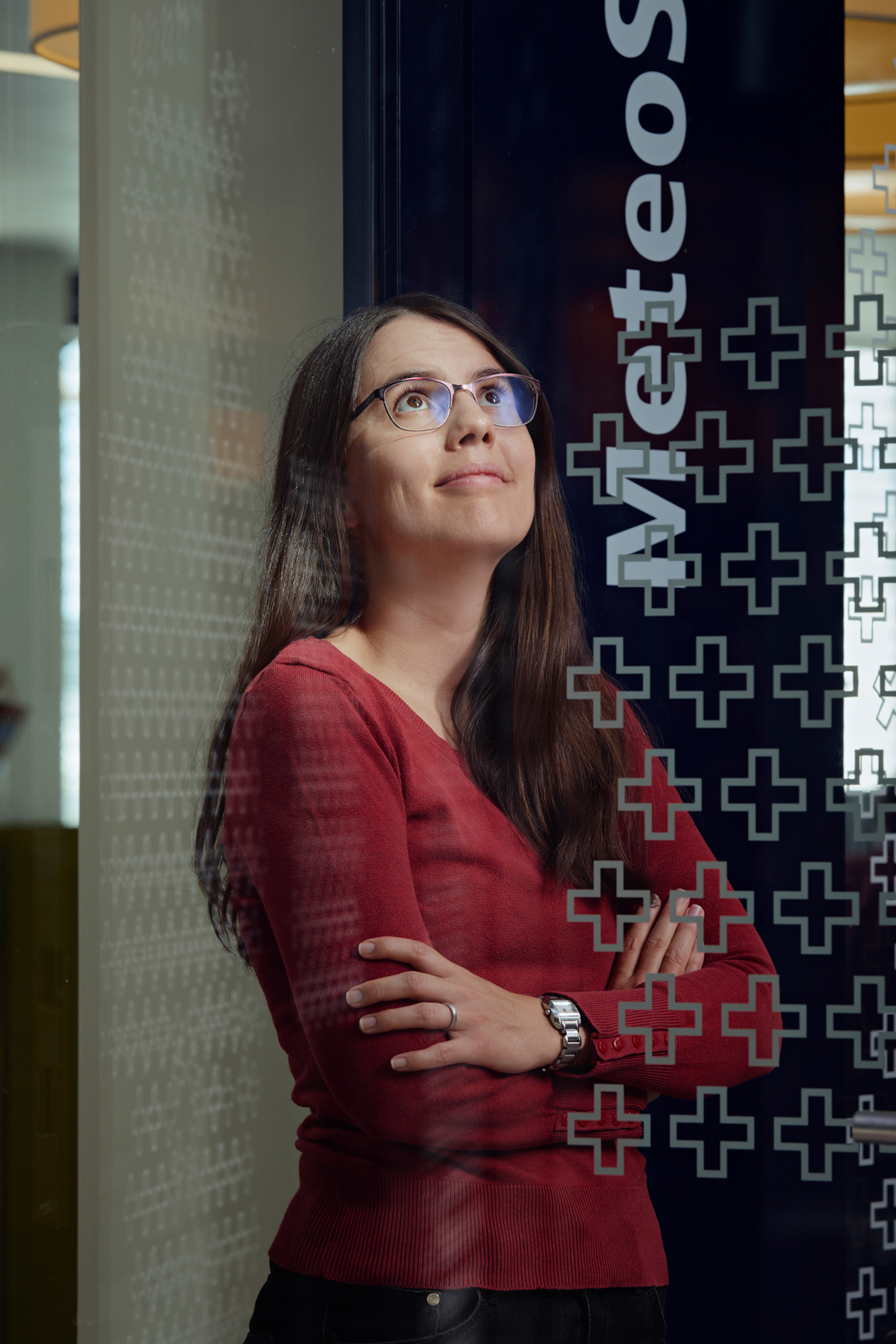
© ETH Foundation / Hannes Heinzer
Whether it is heavy rainfall, heatwaves or storms, detecting extreme weather events early is becoming increasingly important. Former Excellence Scholar Lea Beusch develops algorithms that systematically analyse large volumes of weather data. In doing so, she helps forecasters at MeteoSwiss assess potentially dangerous weather conditions more accurately and issue timely warnings.
You develop algorithms that automatically detect extreme weather. What can an algorithm do better than a human today – and where are its limits?
LEA BEUSCH – Modern weather models generate vast amounts of data. Algorithms can analyse them much faster and more systematically than humans can. They detect patterns, flag potential extreme weather situations and take into account the different warning thresholds in the different regions of Switzerland. This produces maps showing the probability of each warning level being reached, as well as concrete proposals that support our forecasters in their warning decisions. Algorithms, however, cannot replace human experience. Our experts assess how reliable a weather model is in a given situation and when additional information is needed. Their expertise is also particularly important when communicating with the authorities. Especially when dangerous weather conditions are developing, expert assessment, experience and personal dialogue are essential.
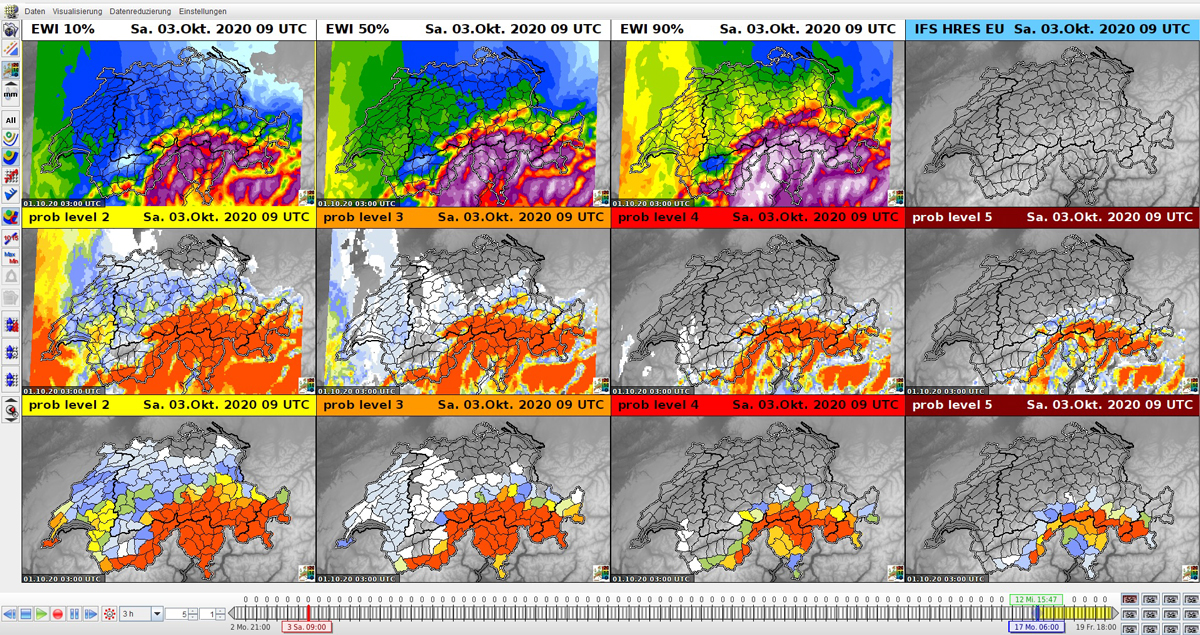
© MeteoSwiss
During your Master’s degree, you received an Excellence Scholarship. Where do you see the scholarship having had the greatest impact – for you personally and for society?
For me, the scholarship opened the door to research. It covered my living costs, allowing me to focus fully on my studies and research interests. During my Master’s, this enabled me to turn my Bachelor’s thesis on a foehn event in the Andes, together with my mentors, into a scientific publication. For society, I see the greatest benefit in the knowledge generated. At the time, the foehn system we studied had barely been researched. My early research experience also helped me to make my own contributions quickly later during my doctorate. At the heart of my doctoral studies was the development of a statistical climate emulator that can be used to estimate how different emissions scenarios affect local temperatures. Building on these results, my professor was later able to secure external research funding and develop the field further.
Looking back at your journey so far, what are you particularly proud of?
A particular highlight was receiving the ETH Medal and the Atmospheric Chemistry and Physics (ACP) Award for my dissertation. But what makes me even happier is that today, at MeteoSwiss, I work on products that are used directly in practice. I have always been motivated by the idea of advancing scientific knowledge while creating tangible benefits at the same time. I am also very proud of decisions that do not appear on any CV: my husband and I share family responsibilities, paid work and housework equally. After our daughter was born, we each took the same amount of unpaid leave, one after the other, and then reduced our working hours to the same level. The more couples live this way, the more likely others are to see that it is both feasible and enriching.
© ETH Foundation / Hannes Heinzer
About “3 questions for …”
In this series, we hear from people across the ETH community: researchers, young entrepreneurs, supported talents, alumni and partners. The focus is on personal journeys, current projects, and how funding and engagement create impact for society.