SBB and ETH Zurich extend partnership for the mobility of tomorrow
SBB and ETH Zurich are extending their strategic collaboration in mobility research for another five years. Together, they aim to translate scientific findings more quickly into practical solutions for the challenges facing Switzerland’s mobility system – from the further development of rail services and freight transport to digitalisation, energy and infrastructure.
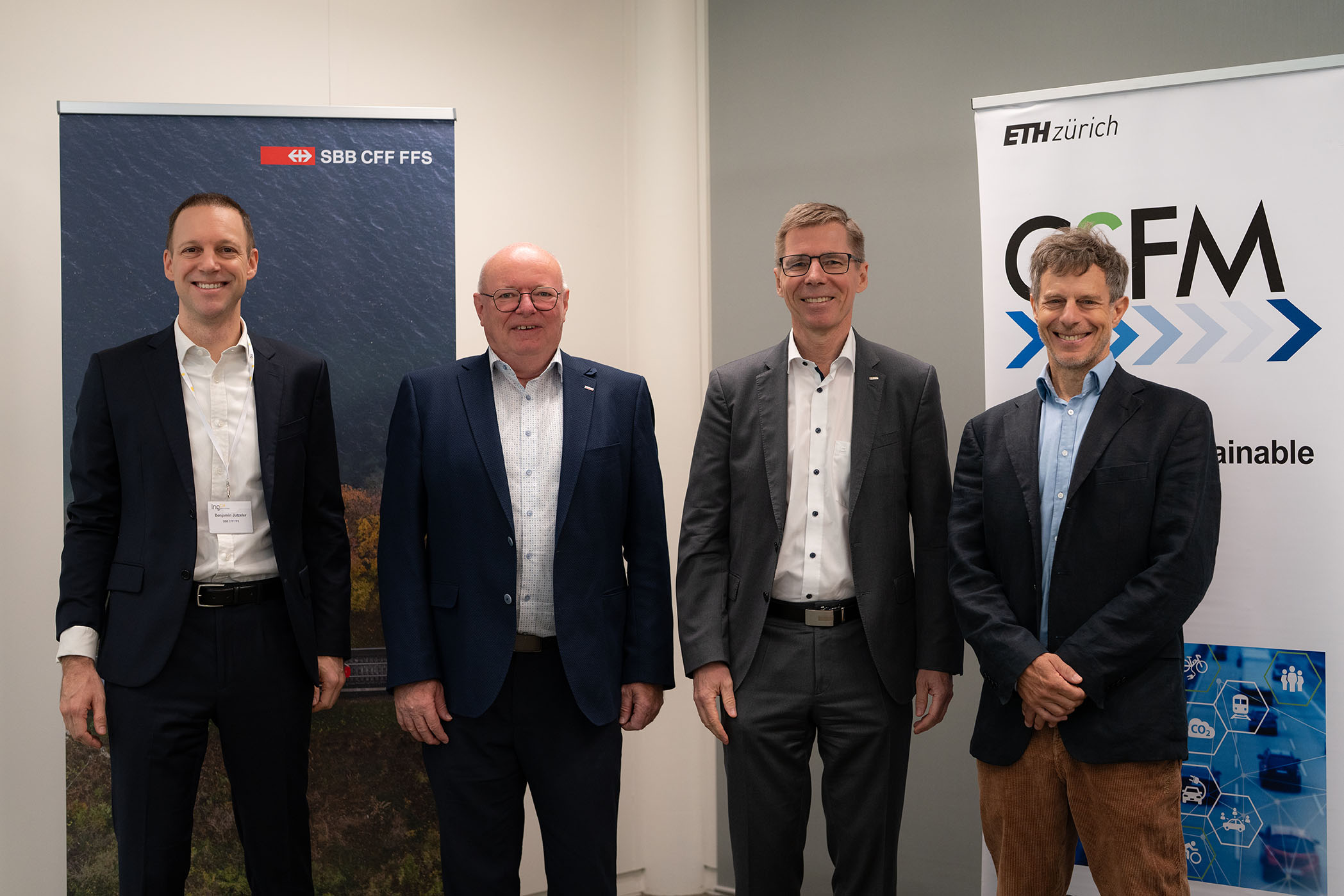
© inaris event foto & video
© inaris event foto & video
SBB has been working closely with ETH Zurich as part of the ETH Mobility Initiative since 2018. The partnership aims to bridge research and practice, thereby laying the foundations for an efficient and reliable mobility system.
SBB CEO Vincent Ducrot emphasises the importance of the partnership: “Our collaboration with ETH Zurich is of central importance to SBB. Together, we are developing the foundations for more stable services, greater capacity and a railway system that will continue to serve as the backbone of climate-friendly mobility in Switzerland.”
Research with direct practical benefits
Research activities are now coordinated within ETH Zurich’s Center for Sustainable Future Mobility (CSFM). The Center brings together around 40 research groups from ETH Zurich, Empa and PSI, connecting expertise across a range of disciplines. Its focus areas include transport planning, infrastructure, new technologies and the decarbonisation of transport.
Joël Mesot, President of ETH Zurich, says: “Particularly in a complex system such as mobility, continuous exchange between science and practice is essential to ensure that new findings can generate tangible benefits. Extending this collaboration is therefore an important step for us and sends a strong signal.”
One example of how this exchange works in practice is the new ID-SwissSWL research project on single wagonload freight in Switzerland. Together with SBB, researchers are investigating how single wagonload transport can be made more adaptable as a network and better managed in response to changing market conditions. Using real-world data from SBB Cargo Switzerland, the project aims to develop a model showing which service points and connections could be maintained, consolidated or adapted. In doing so, the project will provide a scientific basis for strategic decisions on the further development of rail freight transport.
Long-term collaboration for a strong mobility system
Since the collaboration began, around 40 research projects have been supported. These have covered topics ranging from timetable planning and energy management to infrastructure maintenance.
In the next phase, the focus will be on further interdisciplinary research projects, supporting early-career researchers and strengthening knowledge transfer between research and practice. A total of CHF 4 million in funding has been earmarked for these activities.